
ASU named among the world’s best universities for graduate employability — with new MUT partnership expanding global opportunities
Student success driven by real-world skills
Arizona State University (ASU) has once again been recognized as one of the world’s leading institutions for graduate employability, maintaining its position as No. 2 among U.S. public universities — ahead of UCLA, the University of Michigan and Purdue — according to the latest Global Employability University Ranking and Survey (GEURS). Globally, ASU rose to No. 37, reflecting increasing confidence from employers worldwide.
One such example of ASU’s impact is Mariana Torres, a first-generation Latina student at the W. P. Carey School of Business. Torres initially felt lost navigating college life, but ASU’s support helped her earn scholarships, volunteer experience, and internships with industry leaders like Walmart and Google. She also contributed data analysis for global companies such as Intel, Netflix and The Grammys.
“I didn’t know how to get an internship or build a network,” Torres said. “ASU opened doors to opportunities I never imagined.”
A ranking shaped entirely by employers
GEURS, introduced in 2010 and published by Times Higher Education, is the only global ranking based solely on employer insights. It identifies universities that produce career-ready graduates with the skills to thrive in fast-changing industries driven by technology, sustainability and global challenges.
Among ASU’s top employers this year are: Amazon, Intel, Banner Health, Deloitte, Honeywell, Boeing, Charles Schwab, PepsiCo, Honor Health and the U.S. federal government.
ASU expands global footprint with MUT partnership
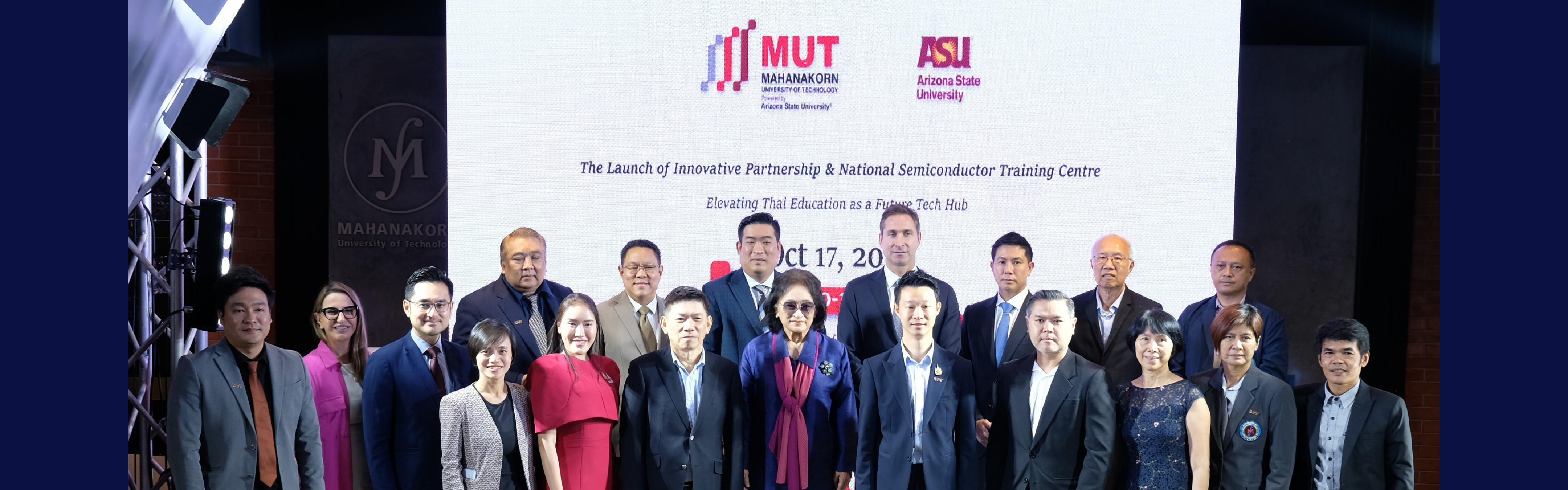
Further strengthening its global ecosystem, ASU has expanded its international presence through a major partnership with Mahanakorn University of Technology (MUT) in Bangkok under the ASU–Cintana Alliance.
Through this collaboration — publicly announced by MUT in 2024 — students at MUT gain access to:
- ASU-enhanced curriculum aligned with international standards
- ASU-developed digital learning tools and resources
- Opportunities for joint research, masterclasses, industry projects, and ASU-endorsed certifications
- Future pathways for qualified students to continue their studies at ASU in the U.S. or through ASU’s global online programs
- Cross-institution collaboration aimed at building a high-skill workforce for Thailand’s innovation-driven industries
Empowering students for the future workforce
ASU students benefit from state-of-the-art career tools, mentorship, job-market insights, resume and interview support, and extensive internship opportunities. Career leaders at ASU continue to encourage students to complete internships because employers “are more likely to hire students with prior experience quicker and with higher pay.”
High-performing students like Sedra Shahin, a Syrian-born first-generation student, demonstrate ASU’s strong outcomes. Shahin will graduate in 2026 with degrees in business administration, business law and public policy — and already has a full-time position at Wells Fargo following her internship.
Conclusion
With global employability rankings on the rise and new partnerships like the MUT–ASU collaboration, Arizona State University continues to expand its influence as a world-class institution preparing students to meet the demands of a rapidly evolving workforce — both in the United States and across Asia.