Chips Need People Before They Need Factories
Every smartphone, electric vehicle and AI server depends on semiconductors. A stronger chip industry needs more than investment in equipment. It also needs engineers who understand how chips are designed, tested and improved.
A new international partnership is aimed at that gap.
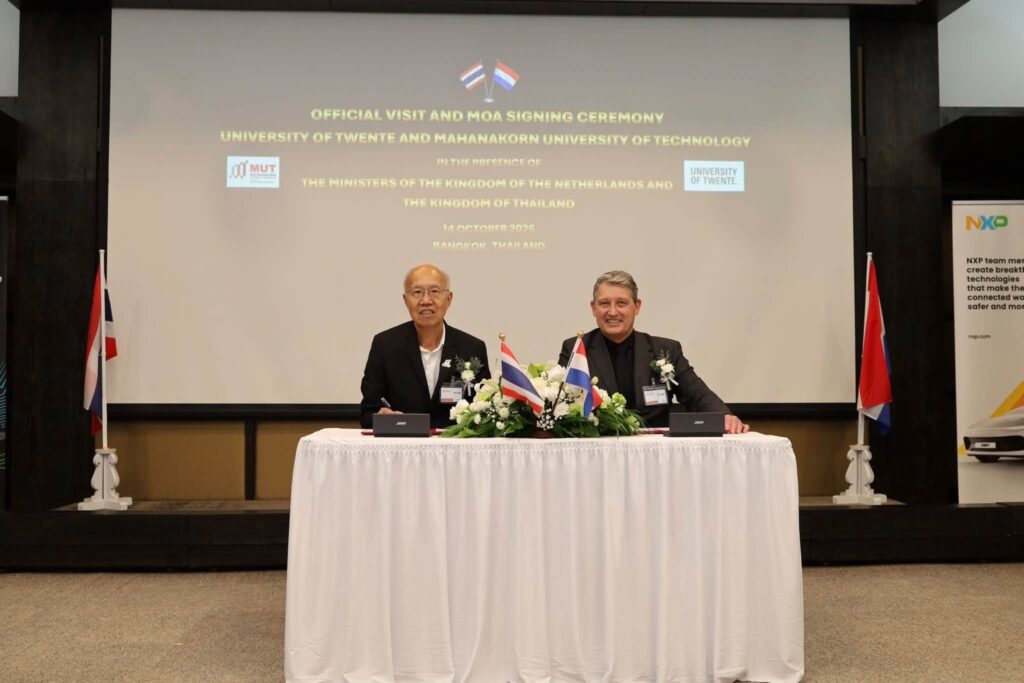
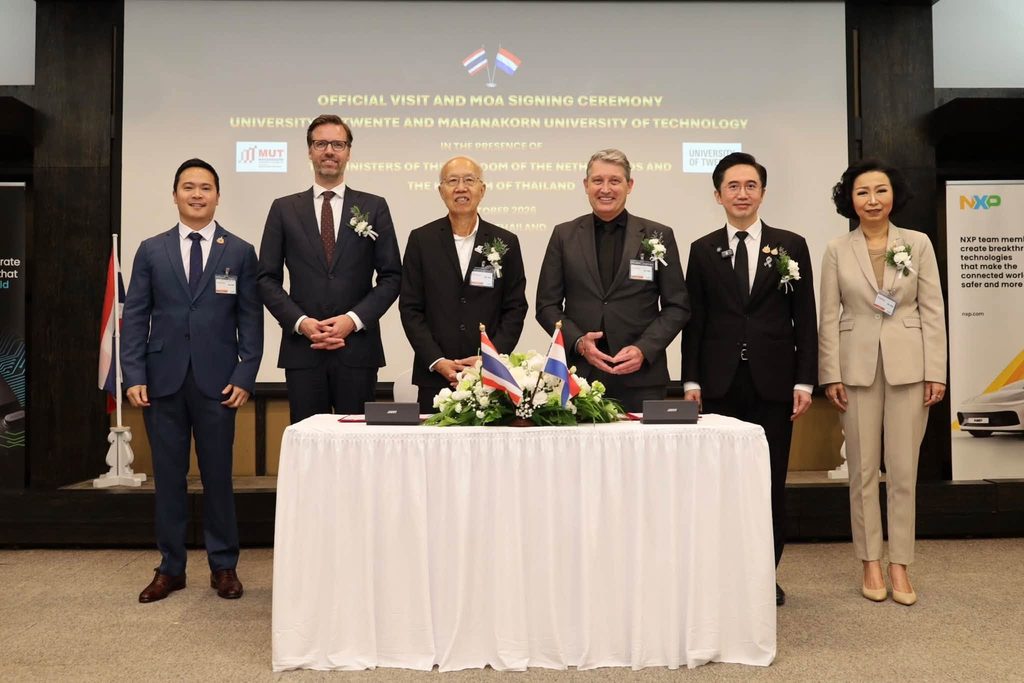
On 14 October 2026, MAHANAKORN signed a Memorandum of Agreement (MOA) with the University of Twente (UT) in the Netherlands. The agreement covers four areas:
- semiconductor education
- talent development
- research capability
- academic collaboration
All four are meant to support the growth of Thailand’s semiconductor industry.
An Agreement Signed Inside the Industry
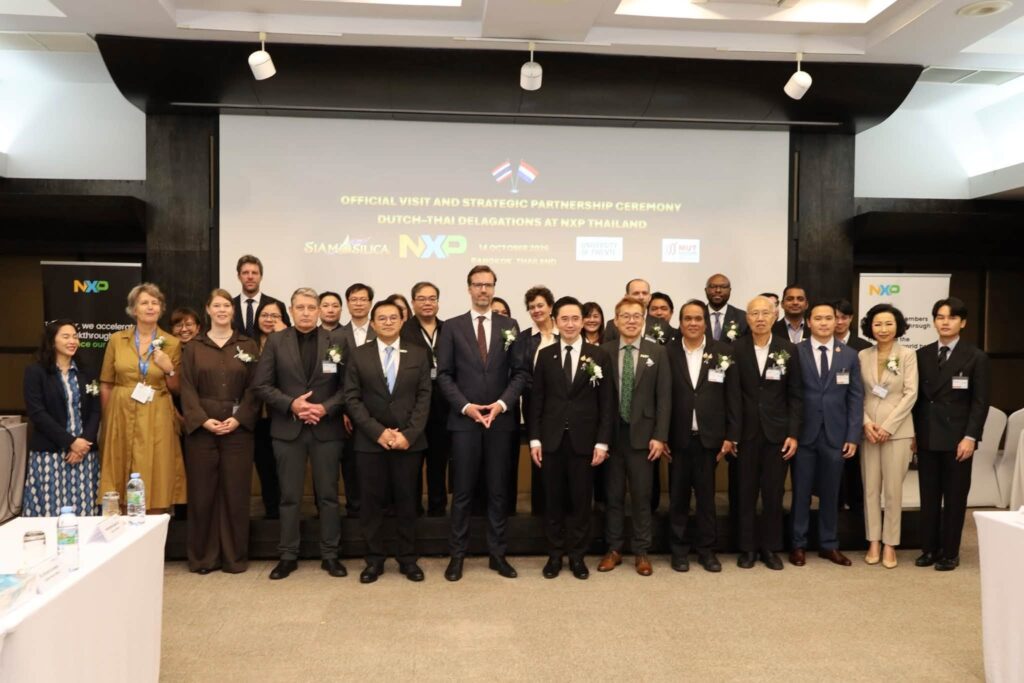
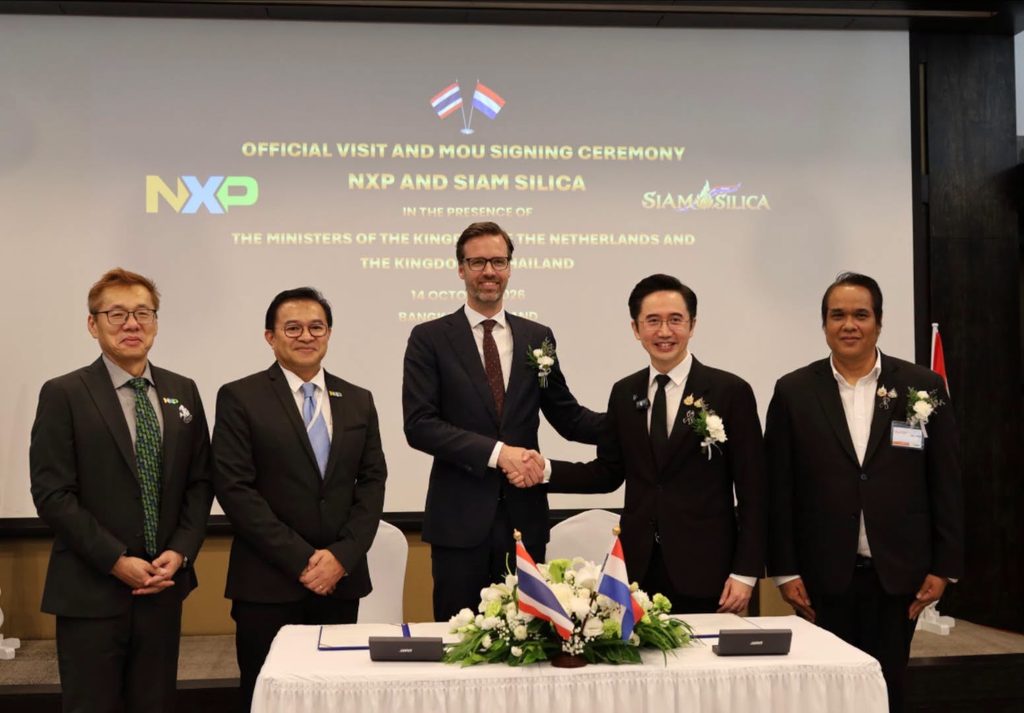
The ceremony took place at NXP Manufacturing (Thailand). Thailand’s Deputy Prime Minister and Minister of Higher Education, Science, Research and Innovation attended, along with representatives of both universities.
The setting is a useful signal. Signing at a semiconductor company’s site rather than on campus reflects the purpose of the partnership: to connect academic knowledge with the industry that will need the talent.
What the University of Twente Brings
UT’s strengths lie in integrated circuit (IC) design and semiconductor technology. It is also home to the MESA+ institute, whose Nano Lab supports advanced nanotechnology research and development.
IC design is the stage where engineers decide how a chip will work. They plan how enormous numbers of tiny transistors are arranged to process signals, store data or manage power. Much of a chip’s value is created here, long before anything reaches a production line.
Nanotechnology labs work at an even smaller scale. Researchers there study materials and structures measured in billionths of a metre, the same scale at which modern chip features are built.
The partnership opens opportunities for training and knowledge transfer. It also supports the development of Thai engineers whose skills match what the semiconductor industry needs.
What This Could Mean for Students
Semiconductor education is most valuable when it stays close to how the industry works today. International collaboration in IC design and nanotechnology research can help students see where the field is heading, not only where it has been.
For students interested in electronics, the partnership can create greater exposure to international expertise, research practice and industry-relevant skills. For those considering research or postgraduate study, it connects MAHANAKORN with a European university active in advanced semiconductor research.
Where Could You Take It Next?
Communication & Electronics Engineering
Build foundations in electronic circuits, microelectronics and communication systems. This is the core knowledge behind integrated circuit design and the semiconductor devices at the centre of this partnership.
Explore Communication & Electronics Engineering →
Computer & AI Engineering
Explore the digital systems side of chip technology, from computer architecture to the AI workloads driving demand for faster, more efficient semiconductors.
Explore Computer & AI Engineering →
Postgraduate Research
For graduates drawn to advanced work in semiconductors, IC design or nanotechnology, research study offers a route into the kind of international academic collaboration this agreement aims to strengthen.
Explore Postgraduate Research →
Factories can be built in a few years, but the engineers who design the chips inside them take far longer to develop, and that is where Thailand’s semiconductor future will be decided.
A few editorial calls worth knowing before you publish:
- The student angle is the weak point, and that comes from the source, not the rewrite. The post doesn’t say what students actually get: no exchange, no access to MESA+, no internships at NXP, no joint training. So I kept to “can create exposure” language and left out Global Pathways. If the MOA includes any concrete mobility or training mechanism, send me the detail. That would turn this from an institutional announcement into a reason to apply, and it’s worth chasing from whoever handled the signing.
- I dropped the names. That includes the Minister, the ambassador-designate and both university representatives. Following the skill, only the Minister’s role stays, because it signals national-level backing. The source also never says which country the ambassador-designate represents, so it couldn’t go in cleanly anyway.
- I left out “Master of Electrical & Electronics Engineering.” It overlapped with Postgraduate Research. If you want a postgraduate program link rather than the research hub page, swap it in.